
10 Minute Consultation: Dr Imran Rafi
Published on 26 September 2024
GP Lives: Neurodiversity in general practice
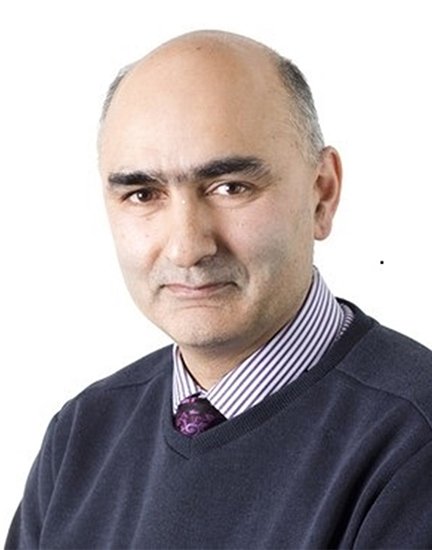
Why did you choose to be a GP?
I always knew that I wanted to maintain an academic post alongside seeing patients, and general practice offers the flexibility and support to do this.
What's the best thing about being a GP?
Working with some wonderful people, colleagues and patients alike. I’ve been so grateful to have worked with fantastic colleagues from primary and secondary care during my career as well as experts in many other areas of healthcare.
What's the most frustrating thing about being a GP?
Underinvestment in our service. With the appropriate resources, GPs could do great things – delivering quality care, organising healthcare pathways and patient centred care through innovation.
What are you most proud of in your career?
Learning about genetics and genomics has been fascinating, particularly when thinking about what it may mean for our patients and how we deal with the challenges in implementation. It’s been great to collaborate with other likeminded GPs, in particular Dr Jude Hayward, a Bradford GP who has a national genomics education role. We are both College co-representatives in genomic medicine.
How did it feel to receive an MBE in the 2024 King’s Birthday Honours List?
I am beyond honoured and humbled and as excited as my children, I never thought it would be possible. I’m really looking forward to receiving the award in November.
What has been the most important lesson you have learnt during your career?
Listen carefully, you may only get one chance.
What is the biggest challenge for current GPs?
I’ll re-frame that. I think it’s important to think about what opportunities can be created which will enable new and existing GPs to enjoy their jobs and their calling to medicine.
Why do you think it's important to be a College member?
It allows you to access fantastic CPD, the ability to work within College networks and the opportunity to become a College representative or to join Council. It is fascinating to be able to shape policy, Faculty work and much more.
What would you be if you weren't a GP?
If I hadn’t studied medicine, I would likely have become a computer programmer, hopefully working on electronic health records and decision support working alongside GPs.
“When I was first appointed as Health and Social Care Secretary I said I wanted to reform the NHS and social care to make them faster, simpler and fairer. A thriving and strong general practice is central to those plans.
“First, is it clear that GPs and their teams are working incredibly hard to get faster care to patients. It was a significant achievement to reach our manifesto target of 50 million extra GP appointments months ahead of schedule. Day in and day out GPs, practice nurses, and our other clinical roles are delivering outstanding care – from preventing illnesses from developing to offering continuity in managing long-term conditions. I am enormously grateful for these efforts.
“We also know that patients place a high importance on the ease of making an appointment. That is why I want to make it a simpler experience to book an appointment and receive care – including upgrading practices with the latest cloud based telephony services as part of our Primary Care Access Recovery Plan. We’ve made good progress on our commitments in the Plan.
“My third priority area is around fairness. I know this will speak to many GPs who are passionate champions for tackling health inequalities in their areas. All of us agree that the foundations of the NHS – care free at the point of use, no matter your background or where you live – are part of what makes us proud to be British. We must continue to strive to uphold those principles. In my position I draw on my own experience as an MP for a Lincolnshire constituency, covering a very large, very rural and coastal area. My constituents often have to travel miles for an appointment, and I have appreciated the challenges that some of my local GPs face around workload, recruitment and retention. That is why I am such a strong supporter of the ambitions of our Long Term Workforce Plan – including a commitment to increase GP training places by 50% over the next 15 years. This will help ensure that the public can call upon a strong general practice workforce, no matter where in the country they reside.”
“After 14 years of Tory mismanagement, general practice isn’t working for patients or practitioners. Across the country, we’ve seen countless examples of GP practices handing in their contracts. The latest GP Worklife Survey revealed that over a third of GPs and record proportions of practitioners under 50 were looking at leaving the profession within five years. We are, of course, deeply worried by this.
“At the same time, satisfaction in our NHS is at an all-time low, down from 70% when Labour left office in 2010 to just 24% in 2023. After over a decade of Conservative government, just 34% of patients were satisfied with GP services.
“In this country, we spend more money on hospital care relative to community-based prevention than anywhere else in Europe. It means we have an NHS which is a sickness service, more than it is a health service. To resolve this, we must shift more care out of hospitals and into the community – that’s Labour’s vision, and we cannot achieve it without you.”
“The vast majority of people I talk to think their GPs are doing a fantastic job, but they're just frustrated that there aren't more of them. People know that GPs and their staff are deeply rooted in their communities. Some patients have a strong personal bond with “their GP”. But Healthwatch also says that access to GPs is consistently identified as the number one frustration raised by patients.
“Liberal Democrats believe that community and primary care should be the cornerstone of our health services. But they’ve been hollowed out - and general practice is no exception.
“GPs are now treating an aging population who are living longer with more complex needs. Patients on the 7.8 million NHS elective care backlog (not to mention all the other backlogs) are relying on their GPs to look after them as their conditions deteriorate.
“At the same time, GPs and their staff are adapting to new IT triage systems and building new relationships in the new ICB structures. And much of their work is unseen or misunderstood. From diagnosing patients, issuing prescriptions, referring to other services and chasing up letters to hospitals or other health agencies, there have been huge increases in work.
“Astonishingly, GPs are nonetheless providing millions more appointments, but it just isn’t sustainable.
“It brings potential risk to patient safety, to burnout, and quite frankly, to GPs’ enjoyment of the job. GPs also find themselves under attack, whether that's from politicians, the press, or from patients at the reception desk.
“The role of general practice is also changing. The ARRS funding has provided a widening of the skills and roles that now exist in general practice, but it doesn't get away from the fact that we still just need more qualified GPs.
“The Conservatives have failed in their pledge to hire 6000 more GPs, with the number falling in full time equivalent terms since they made that promise in 2019.
“Currently though, we are simply losing GPs faster than we can recruit them, and it's not just through retirement. There is a huge retention problem. 82% of full-time equivalent GPs leaving or reducing their hours are under the age of 60. We are pouring into a leaky bucket, and Liberal Democrats are committed to fixing this.
“Fundamentally, there's no getting away from the fact that we do just need more GPs. That's why the Liberal Democrats have made a bold and ambitious commitment in this area and made it a central pledge of our campaign.”
Read more

10 Minute Consultation: Dr Toyosi Adeniji
3 min read
10 Minute Consultation - Dr Chris Provan
4 min read
10 Minute Consultation: Dr Ursula Mason
2 min readThank you for your feedback. Your response will help improve this page.